Gradian Institute
Accelerating capacity building for in-service clinical and technical providers in sub-Saharan Africa. Spinning off 15 years of training infrastructure into a standalone organization.
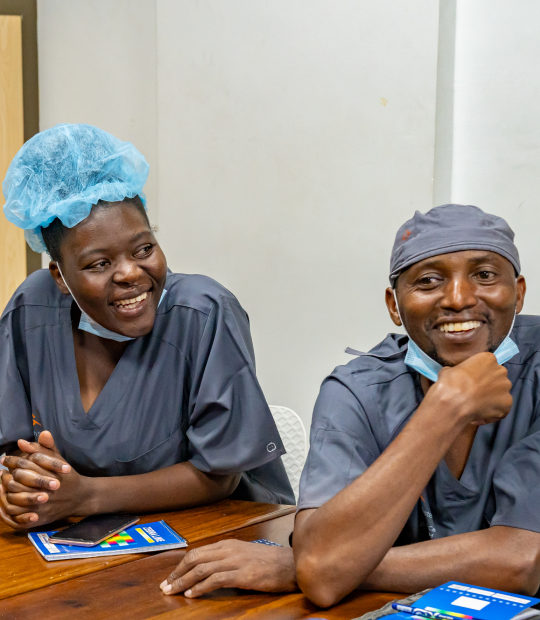
Accelerating capacity building for in-service clinical and technical providers in sub-Saharan Africa. Spinning off 15 years of training infrastructure into a standalone organization.
Share borne by sub-Saharan Africa
Deficiency borne by sub-Saharan Africa
This framework amplifies Gradian Health Systems’ training footprint into a dynamic, standalone organization supporting in-service clinicians and technicians across sub-Saharan Africa with cutting-edge capacity building opportunities.
As a medical technology company operating in resource-limited settings, Gradian Health Systems learned early on that a piece of equipment is only as good as a provider’s ability to use it and a technician’s ability to fix it. Therefore, we made capacitating both groups central to Gradian’s mission-based approach to creating supportive ecosystems for essential medical equipment.
More specifically, Gradian developed expertise in:
→ On-site clinical and technical trainings
→ Remote webinar-based trainings
→ Train-the-trainer and technical certifications
→ Simulation lab development
This work has been critical to Gradian Health Systems’ business operations to date. It’s not only made our work more impactful, but it’s cultivated a generation of clinical and technical champions on the front lines of skill building for the in-service healthcare workforce.
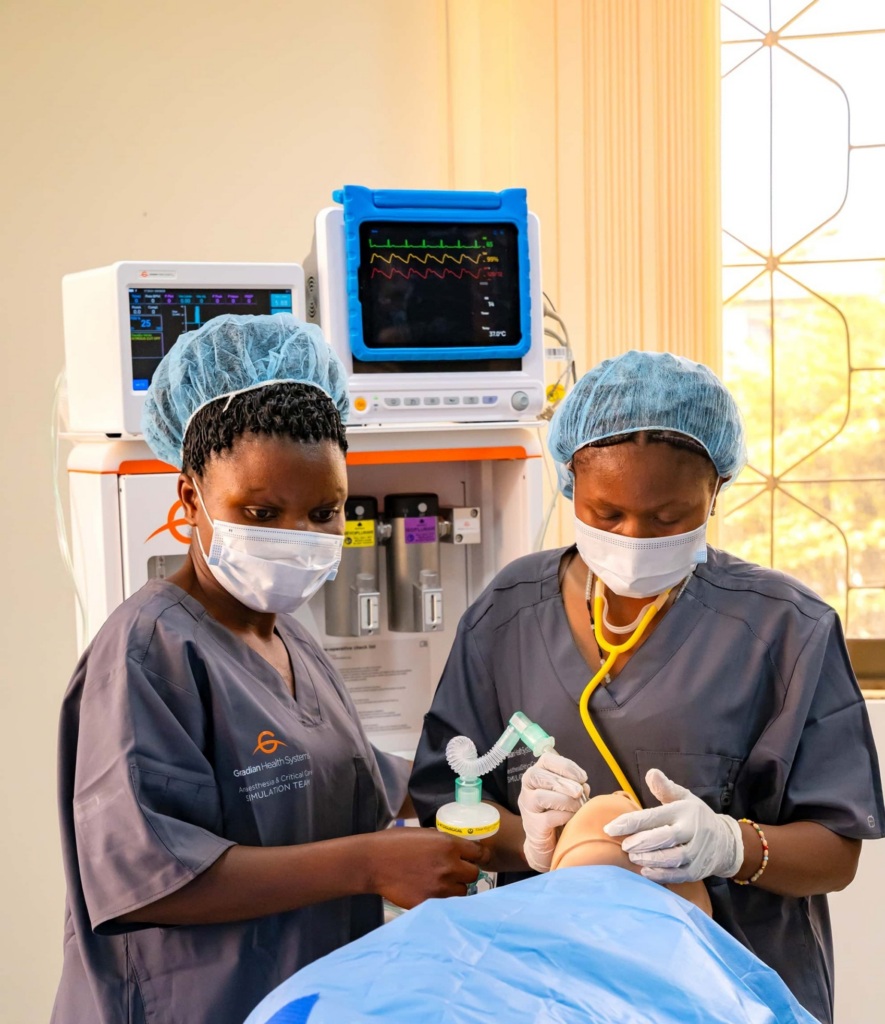
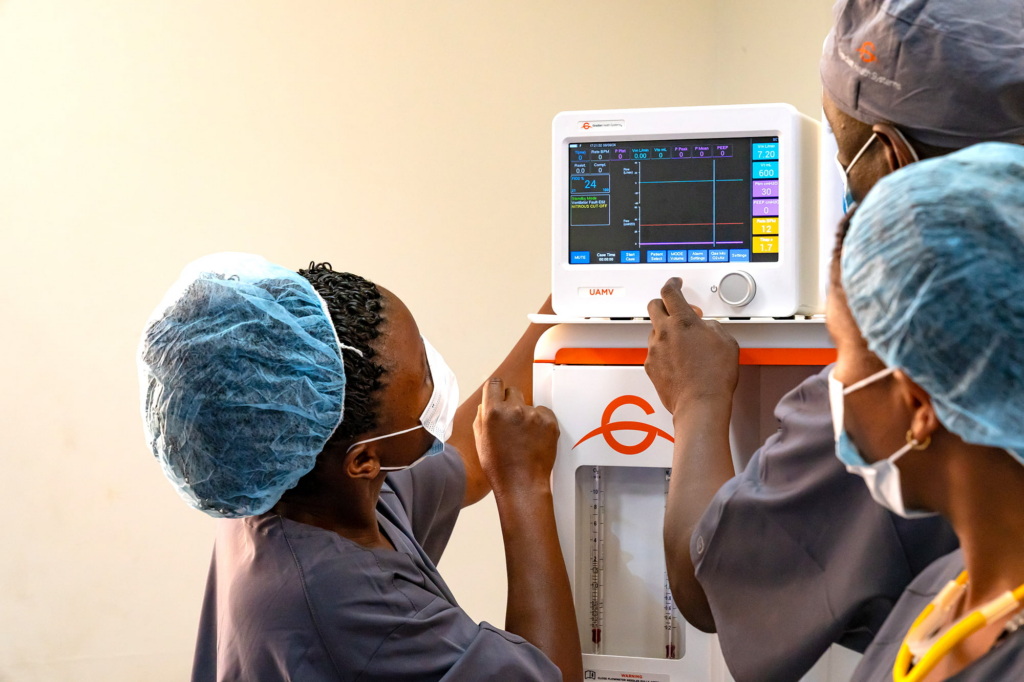
While Gradian has filled gaps specifically related to its equipment, and associated clinical (e.g., intubation) and technical skills (e.g., oxygen concentrator repair), this work was born of a broader shortage — an already overburdened in-service workforce with insufficient opportunities to maintain and grow skills.
For the overburdened healthcare workforce, an array of barriers stands in the way of critical ongoing learning and skill building opportunities.
When available, ongoing training opportunities must be paid out of pocket and taken during unpaid leave.
Remoteness and poor transport pathways create physical barriers to reaching central locations where the scant in-service training opportunities can be found.
The few providers who need training cannot leave their facilities because there are not enough individuals to cover their absence without service interruptions.
Many training materials are developed for contexts that do not apply to the African healthcare landscape, and don’t adjust for language, resource constraints, disease burdens, or clinical realities.
Gradian exists within a much larger and more complex ecosystem of healthcare delivery. We’ve long seen the broader healthcare workforce deficits, but intentionally remained focused on our sphere of influence to ensure maximal impact. However, this focus led to a robust set of operations and champions that together have the power to unlock much more human potential in the healthcare space.
This foundation helped us conceive of Gradian Institute — an organization that leverages 15 years of infrastructure, operations, and champions to give in-service doctors, nurses, biomedical engineers, and technicians access to critical capacity building opportunities to nourish their skills and practice.
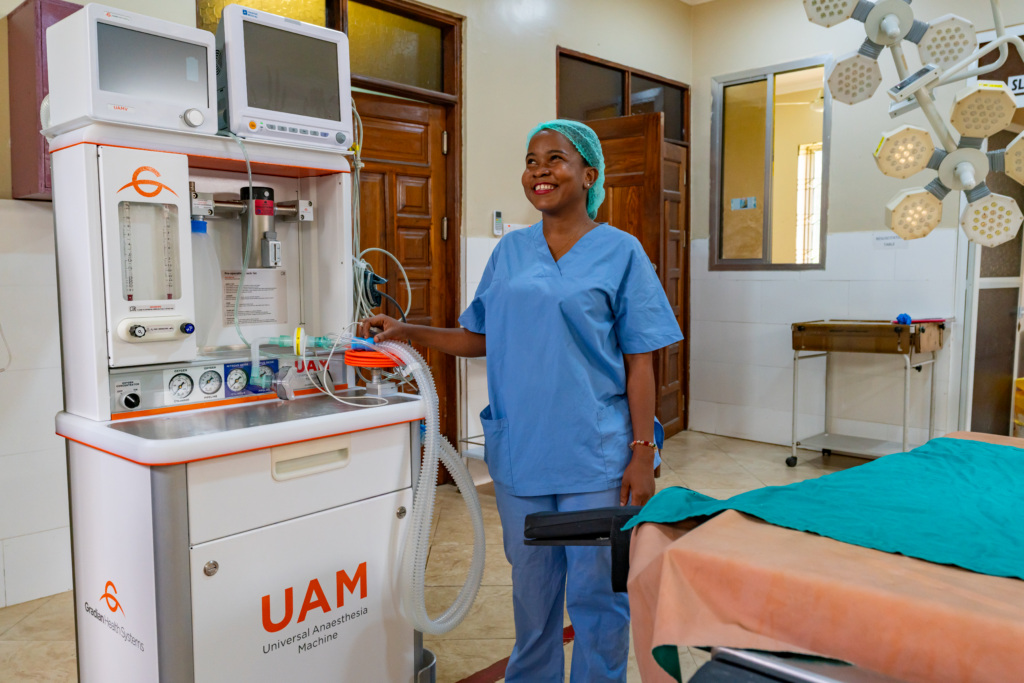

To meaningfully curate in-country buy-in and foster locally relevant objectives, our trainings are built and facilitated, by and for, in-service clinicians and technicians in the countries where Gradian distributes equipment. This work has organically fostered networks of clinical and technical champions who serve as trainers to teach and certify on Gradian products across intersecting clinical domains.
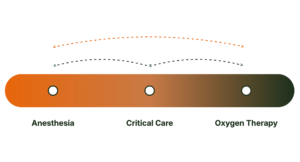
As this community grew, we were challenged by our trainers to go beyond didactics, become less reliant on case-based learning, and minimize interruption to a facility’s clinical operations while conducting trainings. The solution to all three became simulation-based clinical and technical trainings — a hands-on, interactive style of learning that was consistent and nonintrusive. We upskilled as an organization, becoming more dynamic in our training approach by building simulation labs, diversifying our curricula, expanding our remit to include essential clinical refreshers, and creating spaces where repetitive practice didn’t impact multiple patients or the flow within an operating theater.
The result was homegrown communities of practice — skilled professionals supporting each other in their everyday clinical and technical practice. The learning, studying, and innovating that takes place within these groups has been highlighted in research papers, showcased at international conferences, and cemented within academic institutions. These individuals have found a way to amplify their voices through one another by exchanging ideas and raising each other up through naturally occurring opportunities.
Moreover, these conversations are on topics most relevant to the in-service provider continuum. And to put a fine point on it, this is how Gradian Institute operates in the training space: we are not teaching the fundamentals — we’re enhancing the real-world experience with practical training on equipment, and how to apply those skills in both routine and emergency settings.
Gradian Institute is a dynamic organization, agile in nature and operational in practice, to support in-service clinicians and technicians with cutting-edge capacity building opportunities. The Institute is guided by three main pillars of practice.
Gradian Institute is building new training programs and refreshers among our existing network of elite clinicians and technicians to continuously build the capacity of in-service providers and cultivate them as product champions.
Gradian Institute is leveraging Gradian Health Systems’ presence in over 40 countries to conduct rapid data collection, perform rigorous open-access research, and gather high-value clinical insights around patient outcomes, provider practice, and product performance.
Gradian Institute is amplifying the reach of high-fidelity, brick-and-mortar simulation labs by developing and deploying a suite of next-gen tools — including augmented and virtual reality products — for low-bandwidth, high-value skill building at the point of care.
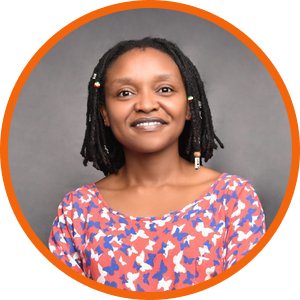
As Executive Director of Gradian Institute, Magdalena leads training efforts to ensure our customers have the knowledge and support to safely and effectively use Gradian medical equipment to provide high-quality care. Based in Kenya, Magdalena engages with trainees and facility managers, Gradian’s network of clinical trainers, biomedical engineers and technicians, and a range of others to ensure trainings best support the evolving needs of our customers. Prior to joining Gradian, Magdalena spent several years in project administration and monitoring and evaluation. She worked for multiple NGOs and a development consulting firm in Kenya, with a particular focus on projects in the finance sector.
Magdalena has a B.A. in Economics from the University of Nairobi and a master’s degree from United States International University-Africa.

Mariam Khan, based in the United States, serves as the Director of External Affairs & Partnerships. Prior to this, Mariam worked at Women Deliver and the UN Foundation. In these roles, Mariam worked on a wide range of initiatives that aimed to advance the progress made on the Sustainable Development Goals (SDGs), including the Women Deliver Conference, the Clean Cooking Forum, the Youth Climate Summit, and the Global Engagement Summit. Mariam has worked closely with a wide range of partners including the Office of the UN Secretary-General and the United Nations High Commissioner for Refugees.
Mariam received her B.S. in Foreign Service from Georgetown University’s School of Foreign Service and her M.A. in Refugee Protection and Forced Migration Studies from the University of London.

Ngajimah is the Senior Operations Coordinator, and based in Tanzania. In this role, Ngajimah plays an important part in supporting the overall operations of training, customer care, and the monitoring and evaluation of our programs. Prior to joining Gradian, he served in various roles in the health and education sector, including as a public health officer.
Ngajimah holds a bachelor’s degree in Sociology from the University of Dar-es-Salaam.
For a partner, the Institute represents distribution-ready training infrastructure: a scalable mechanism to onboard end-users and biomedical engineers onto a new product — country by country, facility by facility.
The aim of these partnerships is to convene across sectors, so all stakeholders have a seat at the table.
Access distribution-ready training infrastructure to onboard end-users and biomedical engineers onto new products across Gradian’s footprint.
Partner on capacity building that strengthens the in-service clinical and technical workforce within national health systems.
Collaborate on open-access research and clinical insight generated across Gradian’s network of over 40 countries.
Invest in a scalable, standalone organization built on 15 years of proven training infrastructure and clinical champion networks.